2026-10-23 ·
What Causes Chimney Leaks During Heavy Spring Rains in Asheville
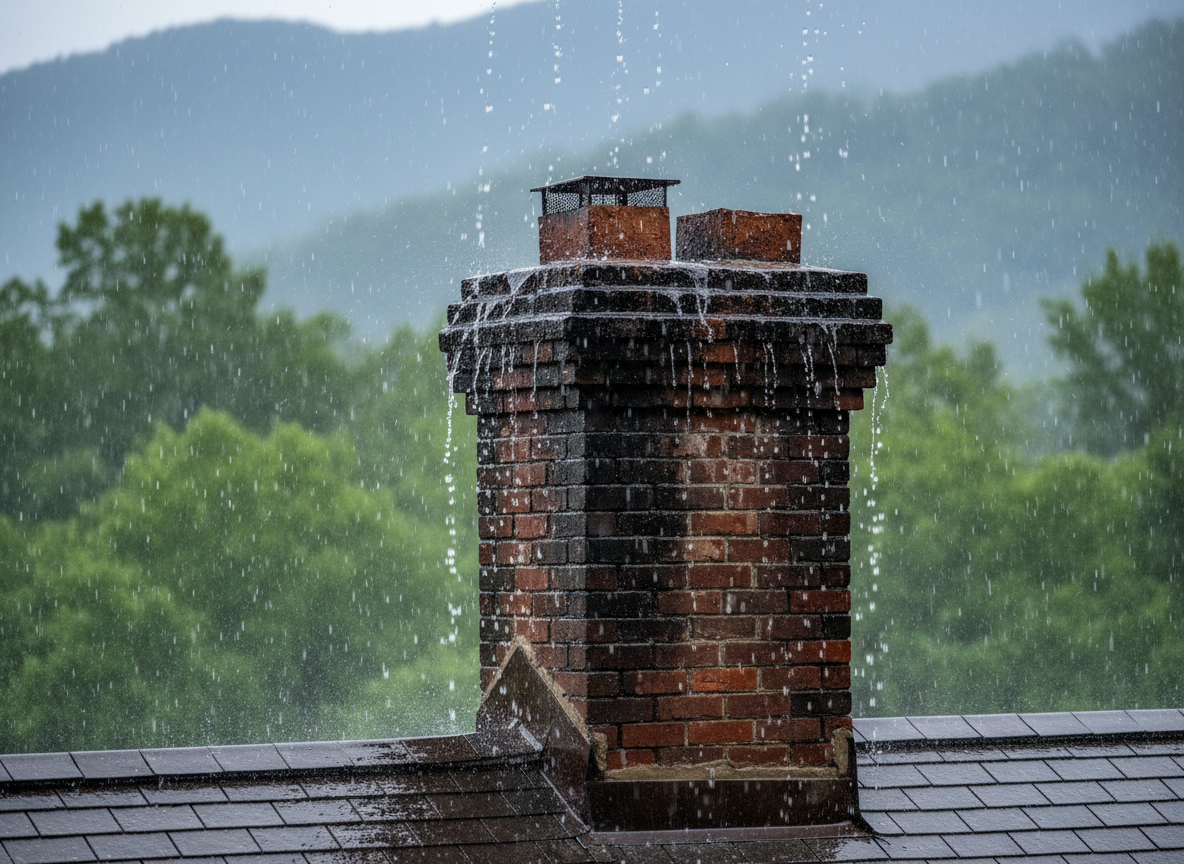
Failing chimney flashing, cracked crowns, and deteriorated mortar joints allow the majority of spring rain intrusion in Asheville chimneys. These failures become obvious when 2–4 inches of rain falls in a single event and wind drives water sideways across rooflines in neighborhoods such as Montford and Grove Park.
Deteriorated Chimney Flashing
Flashing installed where the chimney meets the roof often corrodes after 15–25 years in Asheville's humid climate. Once the metal bends or sealant cracks, water runs behind the brick and soaks interior walls during the frequent spring downpours that hit the French Broad River valley. Homeowners notice brown streaks on ceilings or damp attic insulation directly below the chimney. Proper replacement uses step flashing tucked under shingles and counter flashing mortared into brick joints. This repair stops leaks at the most common entry point without requiring full chimney rebuilds. Regular inspections catch early rust before it allows water past the roof deck.
Cracked or Missing Chimney Crowns
The concrete crown on top of the chimney sheds water away from the flue. In Asheville, freeze-thaw cycles and heavy spring rain erode the crown surface, creating hairline cracks that widen to 1/4 inch or more. Water then pools and migrates down the flue tile or outer brick. Older homes in the Montford District often show crowns poured without proper slope or reinforcement, accelerating failure. A new crown must extend 2 inches beyond the brick on all sides and include a drip edge. Without this fix, rainwater continues to saturate the masonry and damages the fireplace damper below.
Mortar Joint Failures in Older Brickwork
Many Asheville chimneys built before 1960 use lime mortar that softens after decades of exposure. Spring rains saturate the joints, and wind-driven moisture forces water 8–12 inches into the wall. Loose bricks and missing mortar allow water to reach the interior framing. Tuckpointing restores the joints using matching mortar that resists the area's frequent 50–60 mph ridge winds. This work is especially relevant for stone and brick chimneys common on the west side of town near the Blue Ridge Parkway.
Role of Wind-Driven Rain on Mountain Ridges
Asheville's ridgelines turn ordinary spring storms into wind-driven events that push water under caps and through any gap larger than 1/8 inch. Homes on Town Mountain or Beaucatcher Mountain see leaks even when lower neighborhoods stay dry. The combination of 3-inch hourly rainfall rates and sustained winds forces moisture past standard caps and into the flue. Preparing Chimneys for Wind-Driven Rain on Asheville's Mountain Ridges explains additional ridge-specific steps. Addressing these conditions early prevents water from reaching the firebox and causing costly interior repairs.
When to Schedule Professional Assessment
If brown stains appear on ceilings after spring storms or white efflorescence shows on brick, schedule an inspection promptly. A technician can check flashing, crown condition, and mortar integrity in one visit. Chimney flashing repair, chimney crown repair, and chimney leak repair each target specific failure points common in the Asheville area. Cost Factors for Flue Tile Replacement in Historic Montford District Houses outlines pricing ranges for related masonry work. PrimeBastion operates 24/7 from 4 Herman Avenue Ext, Asheville, NC 28803 and responds to active leaks the same day.