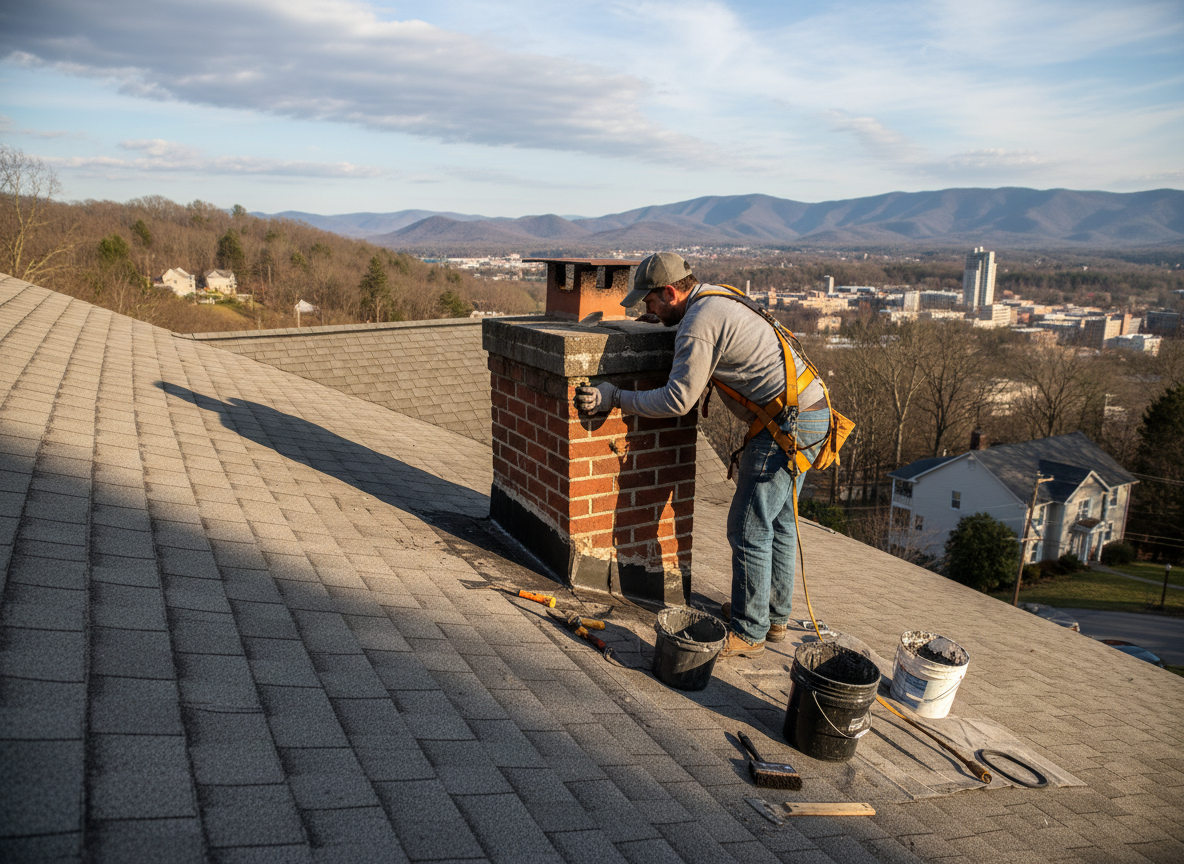
Asheville's frequent heavy rains and freeze-thaw cycles in winter push water through deteriorated mortar joints and outdated flashing on chimneys built before the 1960s. Homes in neighborhoods like Montford and Grove Park often have original brick stacks that lack modern step flashing or cricket saddles, allowing leaks to travel along rafters into attics. Repair work here starts with identifying whether the crown has separated or the flashing has pulled away from the roof deck due to decades of expansion and contraction.
We use stainless steel flashing, hydraulic lime mortar for historic brick, and pre-cast refractory crowns rated for rapid temperature swings. In the Asheville area, where many roofs sit at 8/12 pitch or steeper, access often requires specialized staging rather than standard ladders. Edge cases include leaks that only appear after prolonged rain because water pools behind a failed back flashing on the uphill side of the chimney.
Code compliance in Buncombe County requires proper termination heights above the roofline and sealed penetrations when a liner is involved. Homeowners sometimes attempt sealant-only fixes that trap moisture inside the masonry, accelerating spalling. We always remove failed material first, then rebuild to current standards so the repair holds through the next heavy storm season.
Technician insight
In Asheville, the thing that catches most people out with chimney leak repair is how quickly heavy spring rains find the old mortar on pre-1950 brick chimneys in Montford and Biltmore Village once the original flashing starts to lift on steep roofs.
Leak traced to uphill flashing on a Grove Park chimney
Water was staining an upstairs ceiling after every prolonged rain. We found the original step flashing had pulled away on the uphill side of the chimney where the 10/12 roof met the brick. We removed the failed flashing, rebuilt the crown, and installed new stainless steel with proper counter-flashing. The homeowner reported no further staining after the next heavy storm.
How it works
- 1
Site Assessment
Inspect crown, flashing, mortar joints, and roof interface from both interior and exterior on homes in Asheville and surrounding Buncombe County areas.
- 2
Leak Source Diagnosis
Use moisture meters and targeted water testing to trace how rainwater is entering through crown cracks or failed flashing on older brick chimneys.
- 3
Material Removal and Repair
Remove deteriorated mortar and flashing, then install new stainless steel step flashing and a properly sloped refractory crown matched to local rainfall patterns.
- 4
Verification and Cleanup
Perform post-repair water testing and document the completed work for the homeowner.
Pricing
Pricing depends on chimney height, roof pitch, extent of masonry damage, and whether interior ceiling repairs are required; we provide upfront written quotes after inspection.