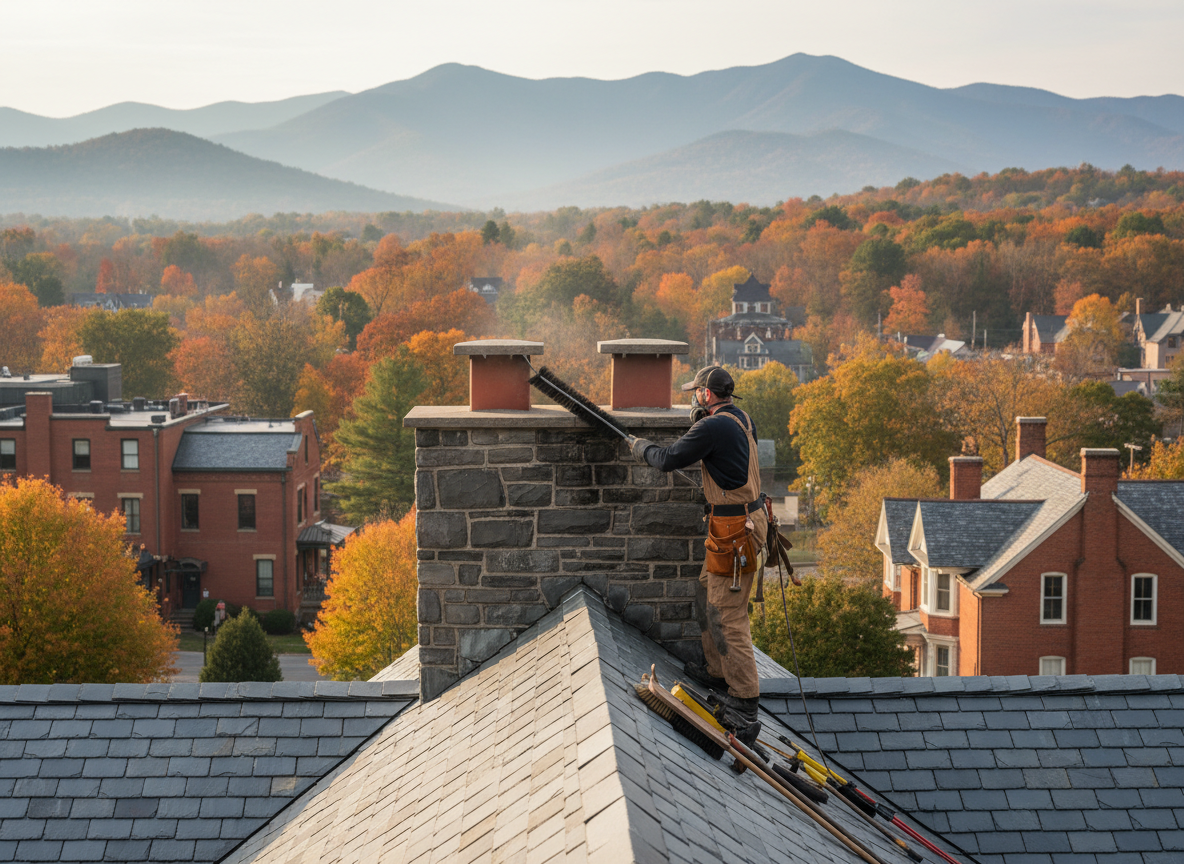
Asheville’s older housing stock, especially pre-1950 brick homes in Montford and Grove Park, features chimneys built with lime mortar that deteriorates faster under repeated freeze-thaw cycles common at 2,000-plus feet elevation. Annual inspection catches hairline cracks before water enters the flue and damages interior plaster or framing during the region’s frequent spring and fall rains. Homeowners who skip maintenance often discover creosote buildup combined with mortar loss that turns a simple clean into full tuck-pointing once winter arrives.
Mountain winds funneling through the Swannanoa and French Broad valleys drive rain sideways against chimney crowns and flashing, accelerating spalling on south-facing stacks. Proper maintenance includes checking the clay flue tiles for separation and ensuring the rain cap remains secure against gusts that regularly exceed 40 mph. Neglected crowns allow water to pool inside the chimney, leading to efflorescence and eventual brick displacement that requires scaffolding on steep Asheville lots.
Routine work also covers sealing the damper and verifying that the smoke chamber is free of debris that can restrict draft in tightly constructed historic homes. Technicians examine the chimney-to-roof intersection for failed counter-flashing, a common failure point on metal roofs prevalent in the area. Addressing these details during maintenance prevents carbon monoxide migration into living spaces when wood stoves see heavy use during cold snaps.
Technician insight
In Asheville, the thing that catches most people out with chimney maintenance is the way freeze-thaw cycles in the mountains open mortar joints in 1920s–1940s brick chimneys on north-facing slopes in neighborhoods like Montford; once water gets behind the brick it freezes again and pushes the stack out of plumb before homeowners notice anything from inside.
Grove Park Chimney Assessment
A 1930s brick home showed staining on the second-floor ceiling after heavy October rain. Inspection revealed failed crown mortar and separated flue tiles allowing water to run down the smoke chamber. We repointed the crown, cleaned the flue, and installed a new stainless cap. The homeowner reported no further moisture issues through the winter.
How it works
- 1
Initial Exterior Assessment
Technician examines the chimney crown, flashing, and brick joints from the roof and ground level for visible cracks or displacement caused by Asheville’s weather exposure.
- 2
Flue and Smoke Chamber Inspection
Camera or mirror inspection checks for creosote, tile separation, and mortar loss inside the flue, common in older Buncombe County homes.
- 3
Cleaning and Minor Repairs
Remove loose debris, repoint deteriorated mortar, and reseal the damper while noting any access limitations on sloped Asheville lots.
- 4
Final Documentation and Recommendations
Provide written findings and a prioritized list of future work needed before the next heating season.
Pricing
Maintenance pricing depends on chimney height, roof pitch, and condition; most Asheville jobs fall into a standard range with clear line-item quotes provided on site.