2026-10-23 ·
Preparing Chimneys for Wind-Driven Rain on Asheville's Mountain Ridges
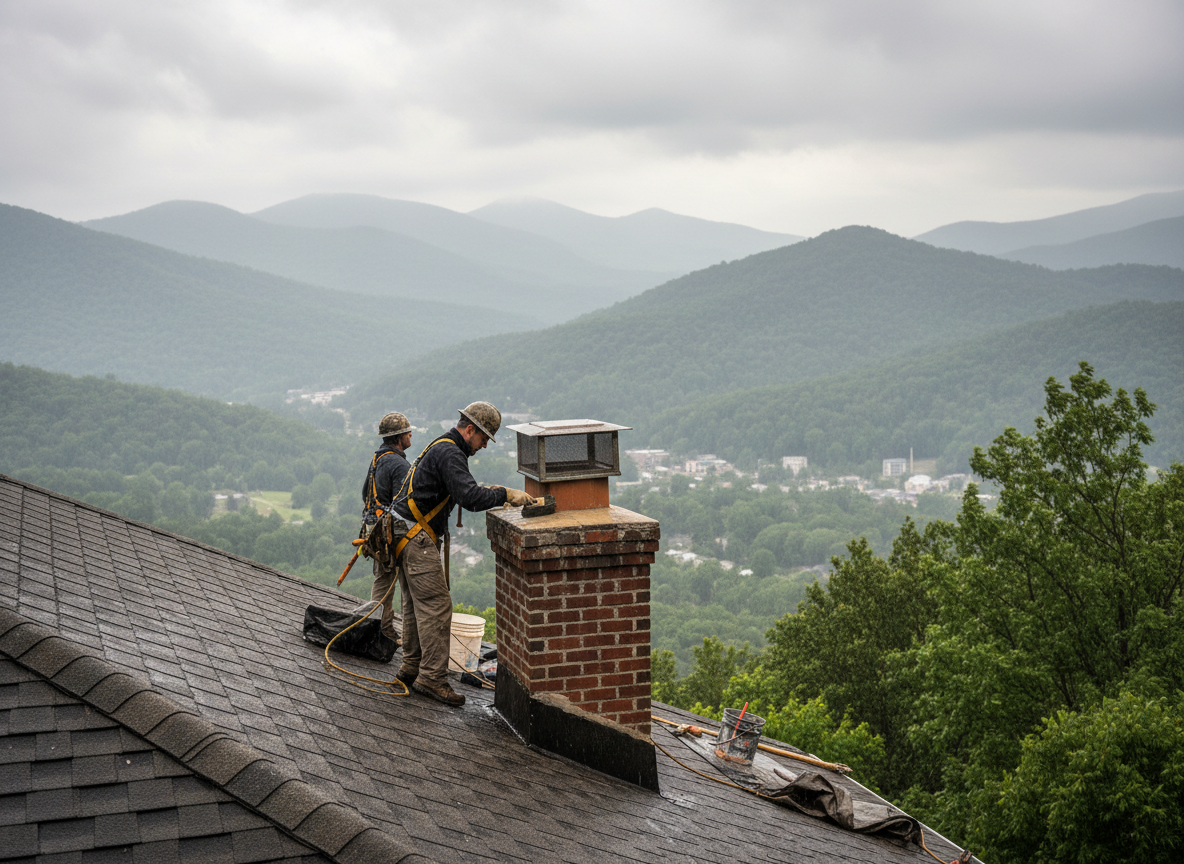
Preparing chimneys for wind-driven rain on Asheville's mountain ridges starts with installing a properly fitted chimney cap and applying chimney waterproofing treatments rated for high-wind exposure. These measures reduce water intrusion that occurs when storms push rain horizontally across ridges like those near Beaucatcher Mountain and Sunset Mountain. Homes in the Asheville area often sit on steep slopes where wind accelerates rain against masonry joints and flashing, leading to interior leaks if left unaddressed.
Terrain and Weather Patterns Affecting Chimneys
Asheville's ridgeline homes face consistent wind-driven rain because the surrounding Blue Ridge Mountains funnel storms and increase wind speeds at higher elevations. Older brick and stone chimneys common in neighborhoods such as Montford and Grove Park experience accelerated mortar erosion when rain enters through hairline cracks and travels downward. The county's frequent spring and fall weather events deliver moisture at angles that standard vertical caps cannot block, allowing water to reach flue liners and cause creosote saturation or structural weakening over repeated cycles.
Elevation changes across the Asheville area also mean that homes on south-facing slopes receive more direct wind impact during typical storm tracks. This pattern requires checking chimney flashing where the chimney meets the roof deck, because wind can force water under standard step flashing on older homes built before modern underlayment standards. Local operators note that addressing these entry points early prevents the need for full chimney masonry repair later.
Selecting and Installing Wind-Resistant Caps
A wind-rated chimney cap with mesh sides and a sloped top blocks horizontal rain while maintaining draft. On Asheville ridges, install caps with extended overhangs that account for gusts exceeding 40 mph during peak storm seasons. Secure the cap to the flue with stainless steel straps rather than relying solely on mortar, which can crack under repeated wind vibration. Homeowners in the Asheville area should verify that the cap model matches the flue size exactly to avoid gaps that allow water entry.
After installation, inspect the connection point annually because thermal expansion from wood stove use can loosen fittings. Pair the cap with chimney cap repair when existing units show bent metal or detached brackets from prior storms. This combination directly counters the wind-driven rain that bypasses standard spark arrestors on many pre-1980s chimneys throughout the region.
Waterproofing and Flashing Upgrades
Apply a breathable chimney waterproofing sealer to all exterior masonry surfaces after cleaning loose mortar. The product must penetrate brick and stone without trapping moisture inside the structure, a common issue on chimneys exposed to Asheville's freeze-thaw cycles. Focus extra coats on the crown and any decorative corbeling that wind-driven rain strikes first on exposed ridge locations.
Replace or upgrade chimney flashing at the roofline using copper or lead-coated copper for longevity in the local climate. Extend the flashing at least 6 inches up the chimney face and integrate it with new step flashing on the roof slope. Homes near the French Broad River valley often see additional humidity that makes thorough sealing essential to stop condensation from compounding rain intrusion.
For readers dealing with existing leaks, review the details in What Causes Chimney Leaks During Heavy Spring Rains in Asheville before scheduling work. Professional application of these upgrades typically requires one full day on site for a standard residential chimney.