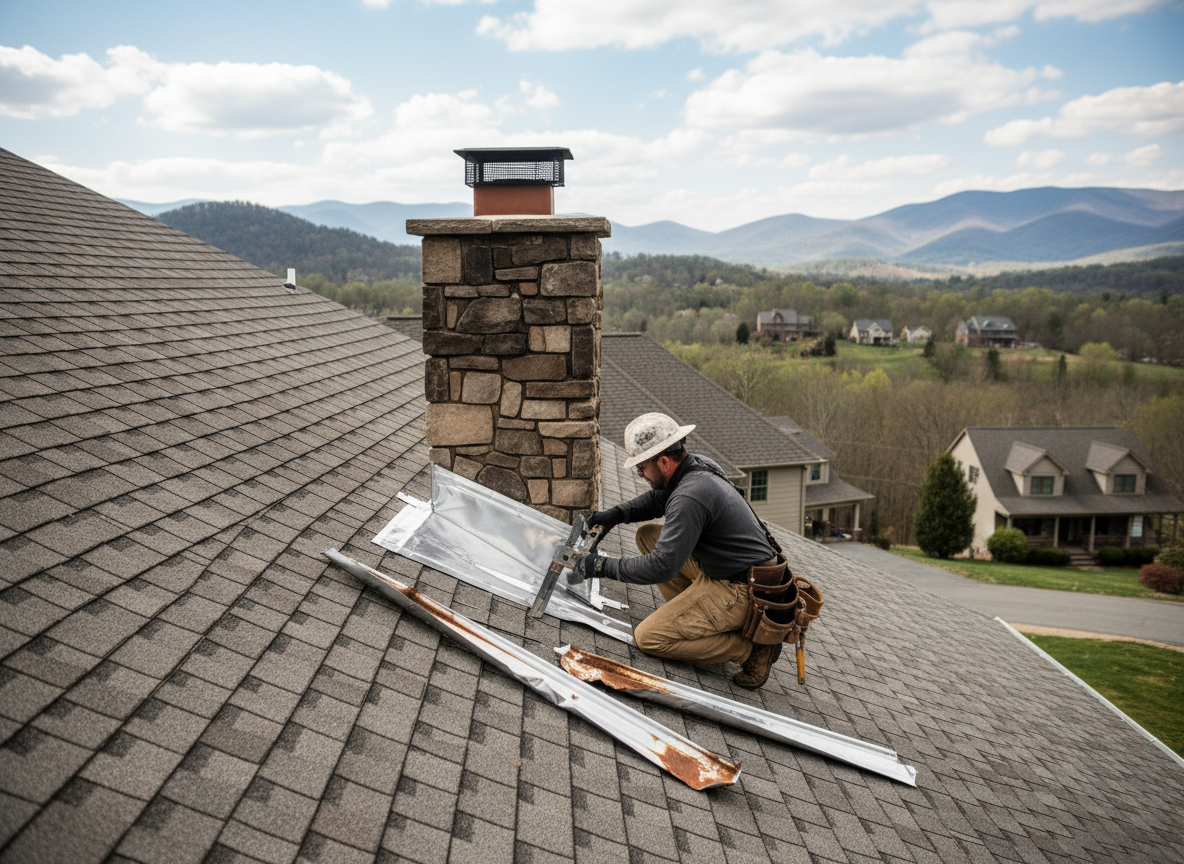
Asheville's older brick homes in neighborhoods such as Montford and West Asheville often feature chimneys built before modern step flashing standards. Heavy rainfall combined with wind-driven patterns on steep pitches pushes water behind deteriorated lead or galvanized flashing, allowing moisture to reach sheathing and interior ceilings. Proper repair requires removing the old material, installing new copper or stainless step flashing that extends at least six inches under the shingles, and integrating it with the existing counter flashing without disturbing the chimney crown or mortar joints.
Mountain terrain around Asheville creates rapid temperature swings that expand and contract metal flashing, loosening fasteners over time. Homes on sloped lots in areas like Biltmore Forest see additional runoff that concentrates at the chimney base. Technicians must account for these conditions by using compatible sealants rated for freeze-thaw cycles and ensuring the flashing overlaps roofing felt by the correct distance to maintain the drainage plane. Skipping this integration frequently leads to recurring leaks that require full roof section replacement.
Code requirements in Buncombe County call for flashing to extend above the roof plane sufficiently to handle snow load and ice dam conditions that occur even in milder winters. When flashing fails, water can bypass the roof deck and saturate insulation or drywall. Replacement work includes inspecting the cricket if present, replacing any rotted wood, and verifying that new flashing meets the roof slope ratio without creating new low points that trap debris.
Technician insight
In Asheville, the thing that catches most people out with chimney flashing repair is how wind-driven rain on the steep pitches found in Montford and similar neighborhoods drives water behind old step flashing on 1920s brick chimneys, especially when the original lead has thinned from acid rain.
Water Stains Around Chimney in West Asheville
Homeowner reported ceiling stains after heavy rain. Inspection showed corroded galvanized flashing on a 1940s brick chimney allowing water past the roof deck. Replaced with copper step flashing properly woven into the shingles and sealed at the counter flashing. Follow-up rain events confirmed the leak was resolved.
How it works
- 1
Site Inspection
Examine flashing condition, roof pitch, and water entry points from both attic and exterior on Asheville homes.
- 2
Old Material Removal
Carefully detach existing flashing while protecting shingles and brickwork common to local historic structures.
- 3
New Flashing Installation
Fit copper step flashing and counter flashing to match roof slope and integrate with existing chimney details.
- 4
Sealing and Cleanup
Apply appropriate sealants, restore roofing materials, and clear all debris from the work area.
Pricing
Upfront quotes based on roof access difficulty, material choice, and extent of any deck repairs needed.