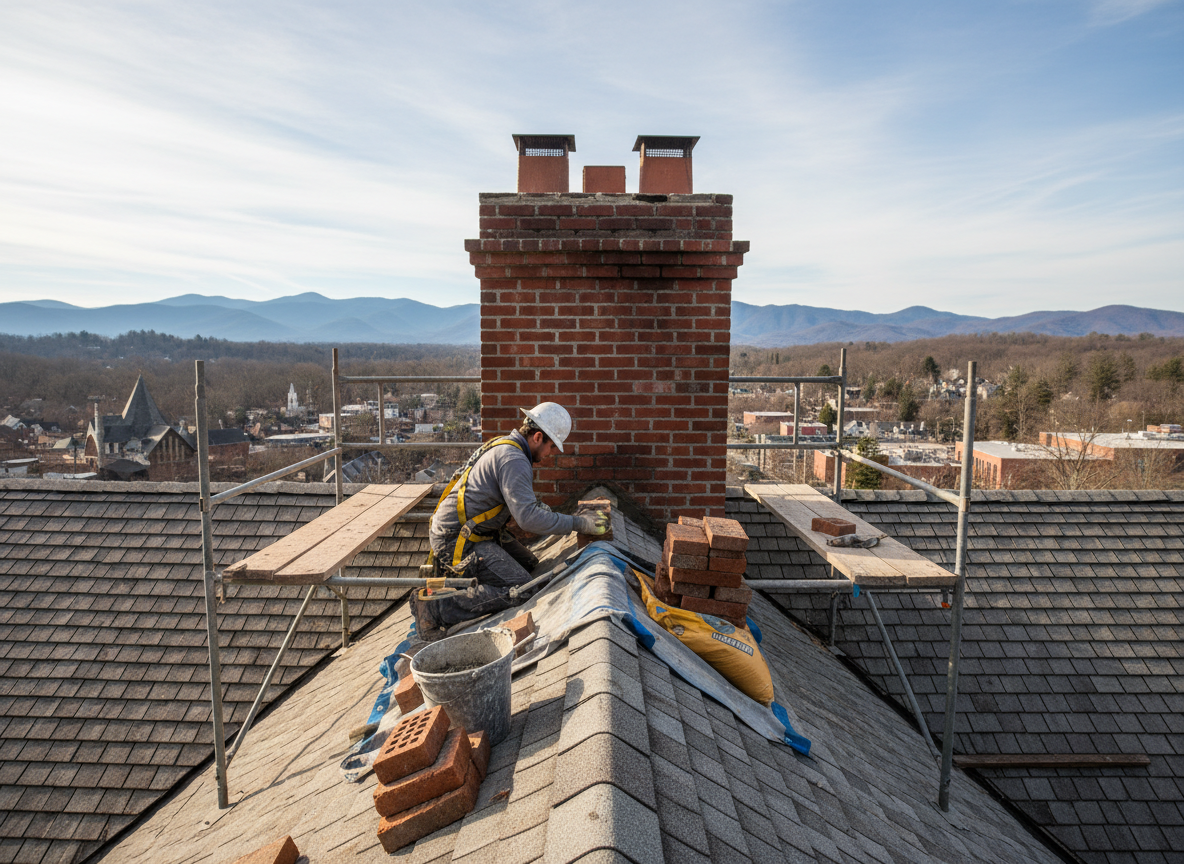
Asheville’s older brick homes in neighborhoods like Montford and Grove Park often feature chimneys that penetrate steep asphalt or metal roofs at awkward angles. Frequent heavy rain combined with freeze-thaw cycles in winter accelerates mortar erosion and flashing failure at the roof line. When water enters here it travels along rafters into attics and second-floor ceilings before homeowners notice. Proper repair requires removing damaged flashing, installing new step flashing that integrates with existing shingles, and re-pointing masonry above the roof deck without disturbing the flue liner.
Mountain terrain in Buncombe County means many jobs involve working on pitches over 8:12 with limited staging space. Crews must account for wind-driven rain that pushes water under standard flashing profiles. We use copper or lead-coated copper step flashing bedded in high-temperature sealant rated for Asheville’s temperature swings. Edge cases include chimneys that exit through valleys or dormers where two roof planes meet; these require custom cricket construction to shed water rather than trap it behind the chimney.
Code compliance in Asheville requires maintaining proper clearance from combustibles and ensuring the chimney cap sits above the roof plane by the required distance. We inspect the cricket and counter-flashing integration on every roof chimney repair to prevent recurrence during the next heavy downpour.
Seasonal Guidance
Winter storms and spring rains expose flashing defects fastest in the Asheville area. Schedule inspection after the first hard freeze or before leaf season when gutters overflow and water backs up against the chimney base.
Technician insight
In Asheville the thing that catches most people out with roof chimney repair is how quickly heavy mountain rains and freeze-thaw cycles destroy standard flashing on the steep pitches common in older Montford and Biltmore Forest homes. Homeowners often notice ceiling stains only after water has already traveled several feet along rafters.
Persistent Leak in Montford District Home
Heavy spring rain caused water stains on a second-floor ceiling in an older Asheville home. Inspection showed failed lead flashing and eroded mortar where the chimney met the steep metal roof. We removed the damaged sections, installed new copper step flashing and a cricket, re-pointed the masonry, and tested the repair. No further intrusion occurred during subsequent storms.
How it works
- 1
Site Assessment
Inspect roof access, chimney height, flashing condition, and water entry points from both attic and exterior on Asheville-area homes.
- 2
Material Removal
Carefully remove damaged flashing and deteriorated mortar without disturbing the flue or roof deck.
- 3
Flashing Installation
Install new step and counter flashing integrated with existing roofing, sealed for mountain wind and rain exposure.
- 4
Masonry Repair and Testing
Re-point above the roof line, install cricket if needed, and test with water to confirm no further intrusion.
Pricing
Upfront quotes after inspection; steep pitch, roof type, and extent of masonry damage affect final cost.