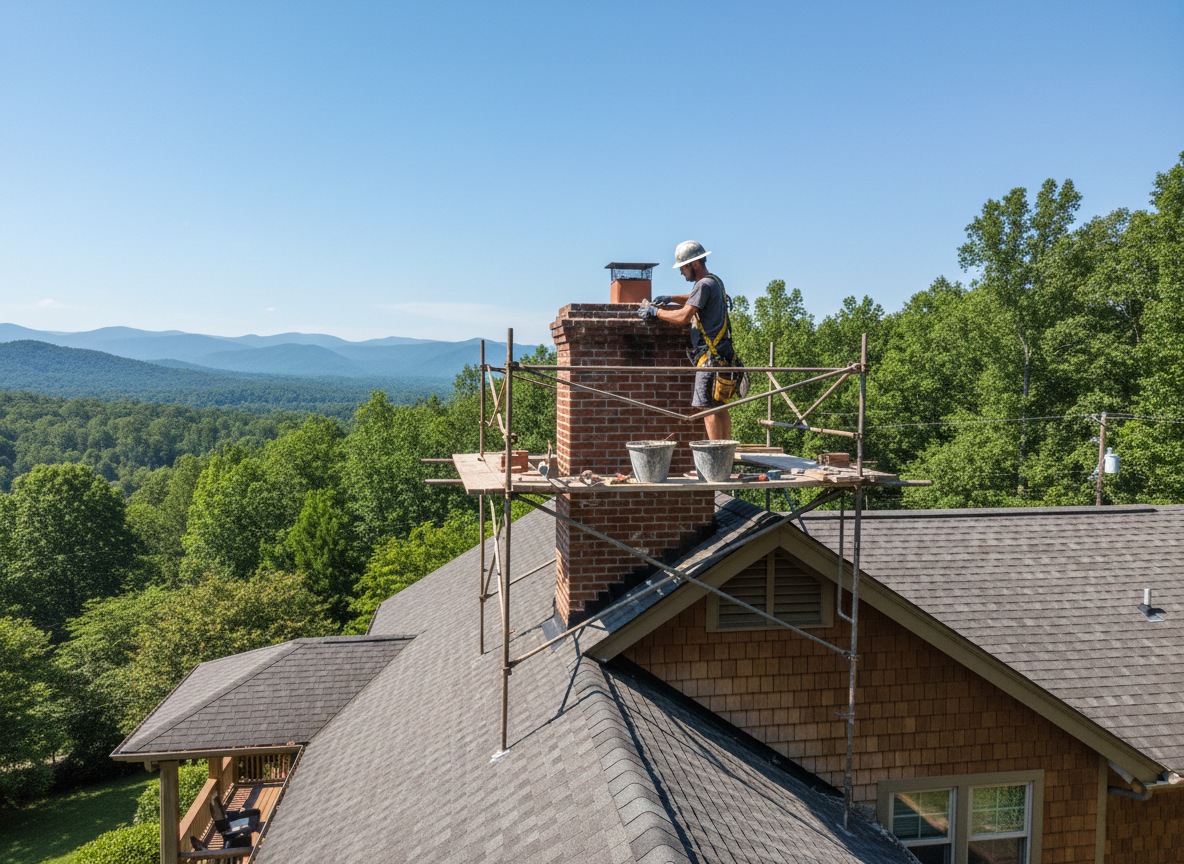
Asheville's older housing stock, especially pre-1970 builds in neighborhoods near the French Broad River and Biltmore Village, often features chimneys with original brick and mortar that has seen decades of exposure. Frequent heavy rains and freeze-thaw cycles break down mortar joints and crown seals faster than in flatter regions, allowing water to reach flue liners and wood framing. Technicians at PrimeBastion check for these hidden paths during every visit because surface cracks rarely tell the full story on sloped lots where runoff concentrates at the base.
Flashing integration with steep metal roofs common around Asheville creates another set of edge cases. When roof valleys direct water toward the chimney, even small gaps in step flashing let moisture travel behind siding. Repair work here requires matching existing materials and slopes so new work does not create new low points. Code updates in Buncombe County also call for proper clearances and spark arrestors on any rebuilt section, details that affect both safety and insurance acceptance.
Homeowners sometimes attempt DIY mortar tuck-pointing only to find the new material does not bond with the older, softer brick found in many Asheville chimneys. This mismatch leads to faster cracking on the next freeze cycle. Proper repair involves removing failed material to sound depth, using compatible lime-based mixes, and installing a new or repaired crown with positive drainage before any liner work begins.
Technician insight
In Asheville, the thing that catches most people out with Residential chimney repair is how steep lots and heavy mountain rainfall funnel water straight to the chimney base on older brick stacks, especially in areas like West Asheville where homes sit on sloped clay soils that hold moisture against the foundation.
Water Intrusion on Steep Lot
Homeowner in a 1940s Asheville house noticed ceiling stains after several days of rain. Inspection showed failed crown and step flashing allowing water to travel down the flue. Crew rebuilt the crown with improved drainage, replaced the flashing to match the metal roof pitch, and confirmed no further intrusion on the next storm.
How it works
- 1
Site Assessment
Technician inspects the full chimney height, roof intersections, and interior flue condition from the 4 Herman Avenue Ext base.
- 2
Diagnosis and Scope
Identify active leaks, deteriorated mortar, or liner damage and outline the exact repair steps needed for the specific Asheville property.
- 3
Material Preparation
Source compatible brick, mortar, and flashing that match the existing structure and meet local runoff and freeze demands.
- 4
Repair Execution
Remove failed sections, rebuild crown or joints, reseal flashing, and verify drainage before cleanup.
- 5
Final Check
Test for water intrusion and confirm the chimney functions safely under typical Asheville weather loads.
Pricing
Upfront quotes provided after on-site inspection because conditions vary widely across Asheville homes.