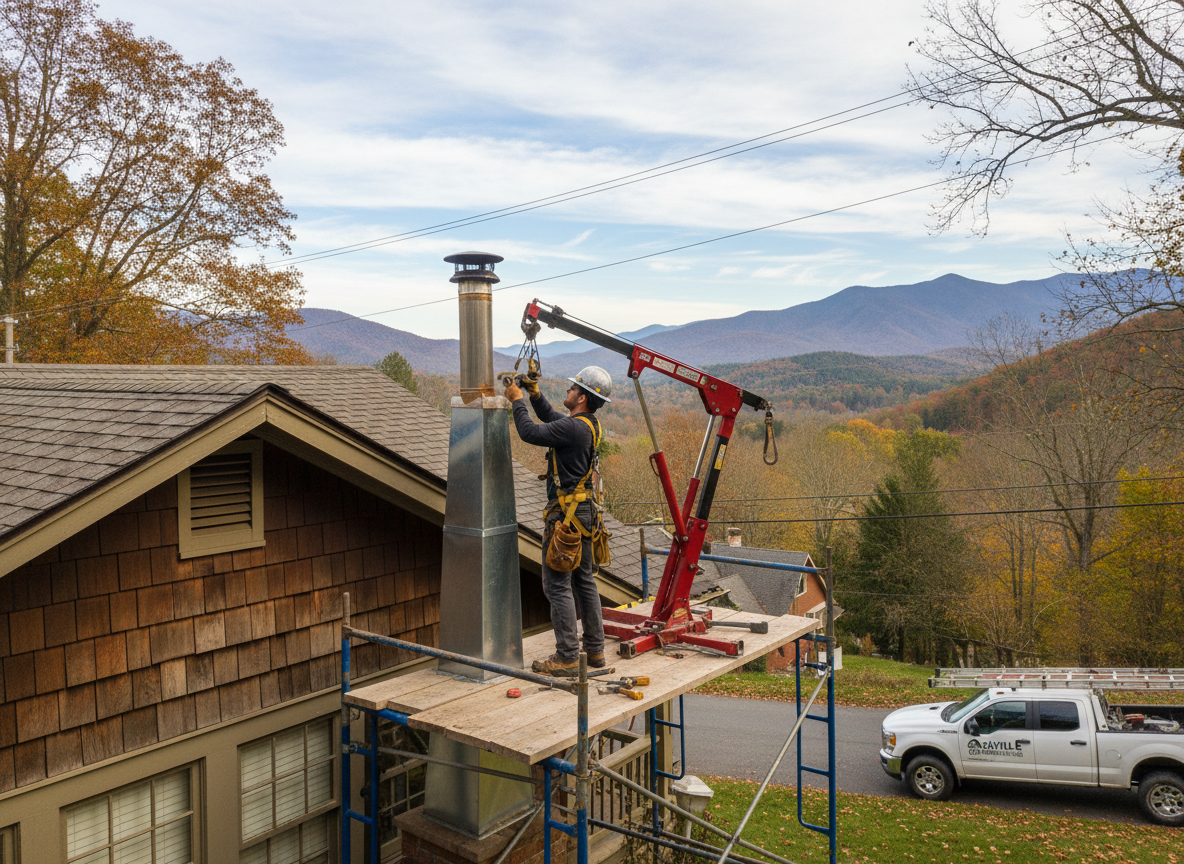
Prefabricated chimneys in Asheville homes often suffer from seam failures where factory sections meet after years of exposure to the region's frequent heavy rains and rapid temperature swings. Water infiltrates at joints, corroding the inner liner and allowing creosote to build up faster than in masonry systems. Technicians must disassemble sections carefully to avoid damaging the surrounding roof flashing common on older Biltmore Village and Montford properties.
Repair work here frequently involves replacing warped or rusted flue sections while preserving the original chase enclosure. Asheville's steep terrain means many installations sit on sloped lots where runoff directs water toward the chimney base, accelerating exterior corrosion. Proper resealing with high-temperature silicone rated for local freeze-thaw cycles prevents recurrence and keeps the system venting correctly for wood-burning appliances.
Homeowners in the Asheville area sometimes overlook the need to match replacement parts to the exact UL-listed model originally installed. Using mismatched sections creates draft issues and code violations during inspections. PrimeBastion stocks common prefabricated components suited to the housing stock found throughout Buncombe County and nearby towns like Weaverville and Black Mountain.
Inspection always includes checking the attic chase for insulation contact and verifying proper clearances to combustible framing, a frequent issue in homes built before modern standards took hold in the mountains.
Technician insight
In Asheville, the thing that catches most people out with prefabricated chimney repair is how quickly mountain rain funnels down steep lots and pools at the base of the chase, rotting the lower sections from the outside in before the homeowner notices any interior signs.
Montford Prefab Section Replacement
Heavy winter rains had caused water to enter at a seam on a prefabricated chimney in a Montford home. Inspection revealed corroded lower sections and insulation contact inside the chase. We replaced two factory sections, resealed all joints with appropriate high-temp materials, and restored proper clearances before the next freeze cycle.
How it works
- 1
Initial Inspection
Technician examines the prefabricated chimney from roof to appliance, checking seams, liner condition, and water intrusion points specific to Asheville rainfall patterns.
- 2
Section Assessment
Identify damaged factory sections and confirm model numbers to source correct replacement parts without altering draft characteristics.
- 3
Disassembly and Repair
Carefully remove failed sections, clean creosote, and install new components with proper gaskets rated for mountain temperature swings.
- 4
Reassembly and Testing
Reinstall sections, reseal all joints, and perform a draft test to verify safe operation before leaving the site.
Pricing
Cost depends on number of sections requiring replacement and roof access difficulty in Asheville terrain.