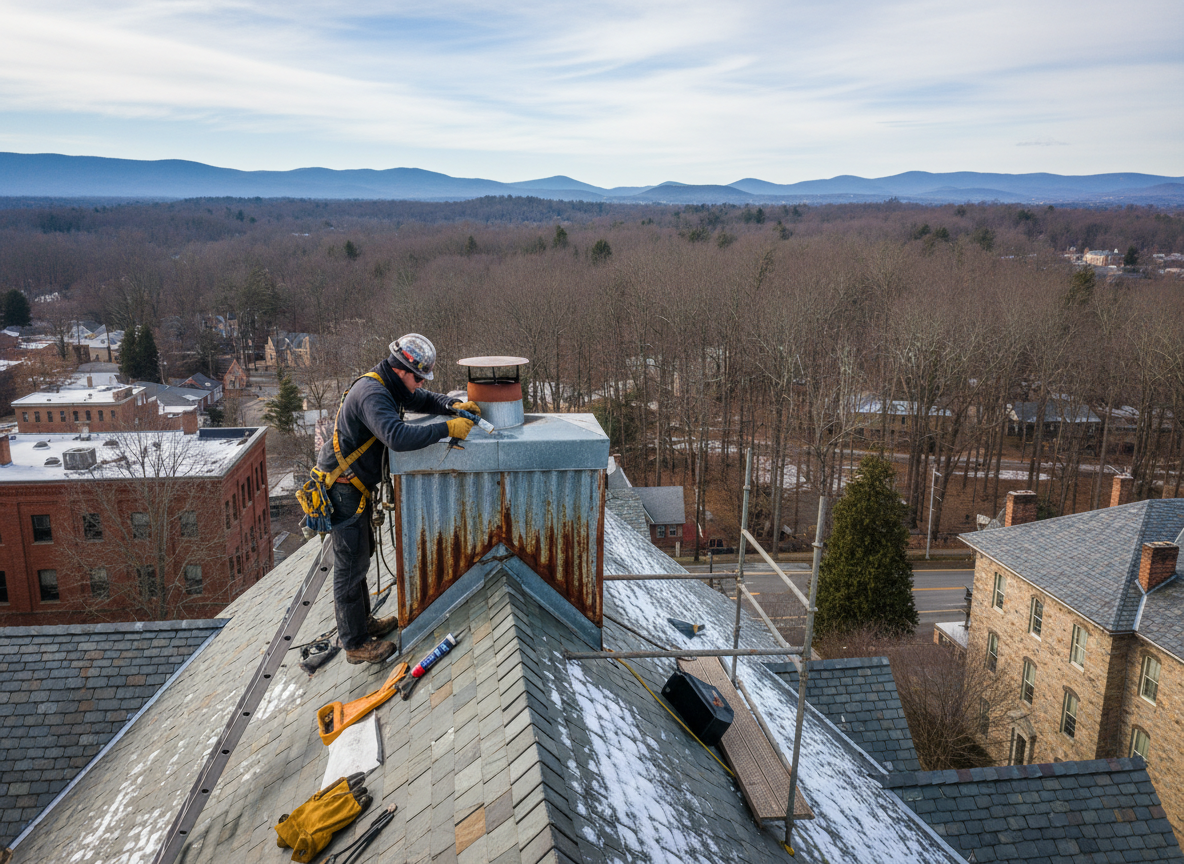
Metal chimneys on Asheville homes built before 1950 often develop pinhole leaks and seam failures where the flue passes through unheated attics. Heavy rain and repeated freeze-thaw cycles in the Blue Ridge Mountains accelerate rust on galvanized and stainless sections, especially at the roof collar and cleanout doors. Homeowners in neighborhoods like Biltmore Village and the River Arts District see these issues most because many structures still use the original metal liners rather than masonry.
Repair work begins with a camera inspection to locate separations or creosote traps that allow water to pool inside the pipe. Technicians then cut out damaged sections and install new stainless-steel sleeves with high-temperature sealant rated for the steep roof pitches common on Asheville hillsides. Access can be limited on properties with narrow driveways or mature tree cover, so crews often stage ladders from the ground rather than rooftops.
Buncombe County requires that any metal chimney work affecting the flue maintain proper clearances to combustibles; skipping this step during repairs has led to attic fires in several documented cases. We always verify that new sections meet current IRC standards before closing up the chase.
Seasonal demand spikes after the first hard freeze when ice expansion opens existing cracks that homeowners never noticed during milder months.
Technician insight
In Asheville, the thing that catches most people out with metal chimney repair is how quickly water gets behind the flashing on the steep metal roofs common in the hills around 4 Herman Avenue Ext. Homeowners assume a small rust spot at the collar is cosmetic until the first hard freeze pushes moisture into the attic insulation.
Corroded Flue on 1920s Home Near Biltmore
Water stains appeared on the second-floor ceiling after a week of steady rain. Inspection revealed separated seams in the original galvanized flue where it passed through the unheated attic. We removed the damaged length, installed a stainless sleeve, and sealed the new joints; the homeowner reported no further leaks through the following winter.
How it works
- 1
Initial Camera Inspection
We scope the entire metal flue from cleanout to cap to map corrosion, separations, and water intrusion points.
- 2
Damage Assessment and Quote
Findings are reviewed on site with the homeowner; we mark exact sections needing replacement and note any clearance issues.
- 3
Section Removal and Sleeve Installation
Damaged metal is cut out and new stainless sleeves are fitted with high-temp sealant at every joint.
- 4
Final Clearance Check and Test
We confirm proper draft, verify clearances to combustibles, and run a smoke test before leaving the property.
Pricing
Pricing is determined after the camera inspection; factors include number of sections replaced, roof pitch, and attic access difficulty.