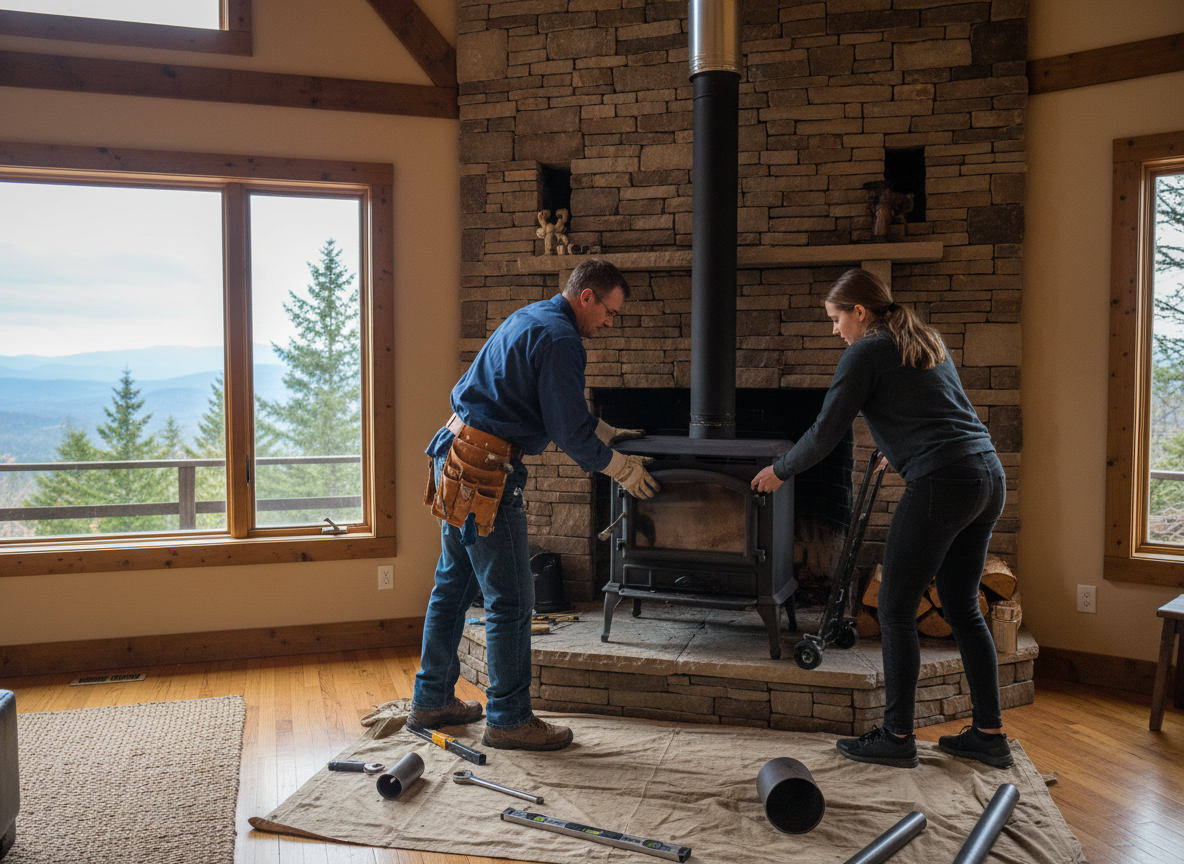
Fireplace installation in Asheville often involves tying new units into older masonry chimneys common in neighborhoods like Montford and Biltmore Village. These structures frequently date back decades and require careful inspection of flue liners and crown conditions before any new appliance is set. Cold mountain winters increase demand for efficient inserts that maintain draft without excessive creosote buildup from frequent use.
Terrain around Asheville creates variable wind patterns that affect chimney draft, especially on sloped lots in West Asheville or near the French Broad River. Installers must account for proper cap selection and height adjustments to prevent downdrafts that push smoke back into living spaces. Owner-operated teams at 4 Herman Avenue Ext respond 24/7 to assess these site-specific factors before proceeding.
Modern wood-burning or gas fireplaces must meet current venting standards when added to historic homes. This includes verifying clearances around combustible materials and ensuring the chimney can handle the new appliance load without risking structural cracks from repeated freeze-thaw cycles in the area.
Draft and Wind Considerations
Local wind exposure on Asheville ridges often requires taller chimney extensions or specialized caps during fireplace installation to maintain consistent draft year-round.
Technician insight
In Asheville, the thing that catches most people out with fireplace installation is how wind exposure on sloped lots near the river or ridges forces extra cap and height work on older chimneys that homeowners never notice until smoke backs up during the first cold snap.
Montford District Chimney Tie-In
A 1920s home needed a new gas fireplace added to its existing masonry chimney. Inspection revealed a deteriorated flue liner and insufficient height for local wind patterns. The team installed a new liner and extended the chimney cap assembly. The result was reliable draft without smoke issues during winter use.
How it works
- 1
Site Assessment
Technicians examine the existing chimney structure, flue condition, and surrounding framing for compatibility with the planned fireplace unit.
- 2
Code and Clearance Check
Measurements confirm required clearances and venting paths meet applicable standards for the specific Asheville location.
- 3
Unit Placement and Connection
The fireplace is positioned and connected to the chimney with appropriate liners or adapters for safe exhaust routing.
- 4
Testing and Handover
Full operation is verified for draft, seals, and safety features before walkthrough with the homeowner.
Pricing
Costs depend on chimney condition, fireplace type, and any liner or extension work required; upfront quotes provided after assessment.