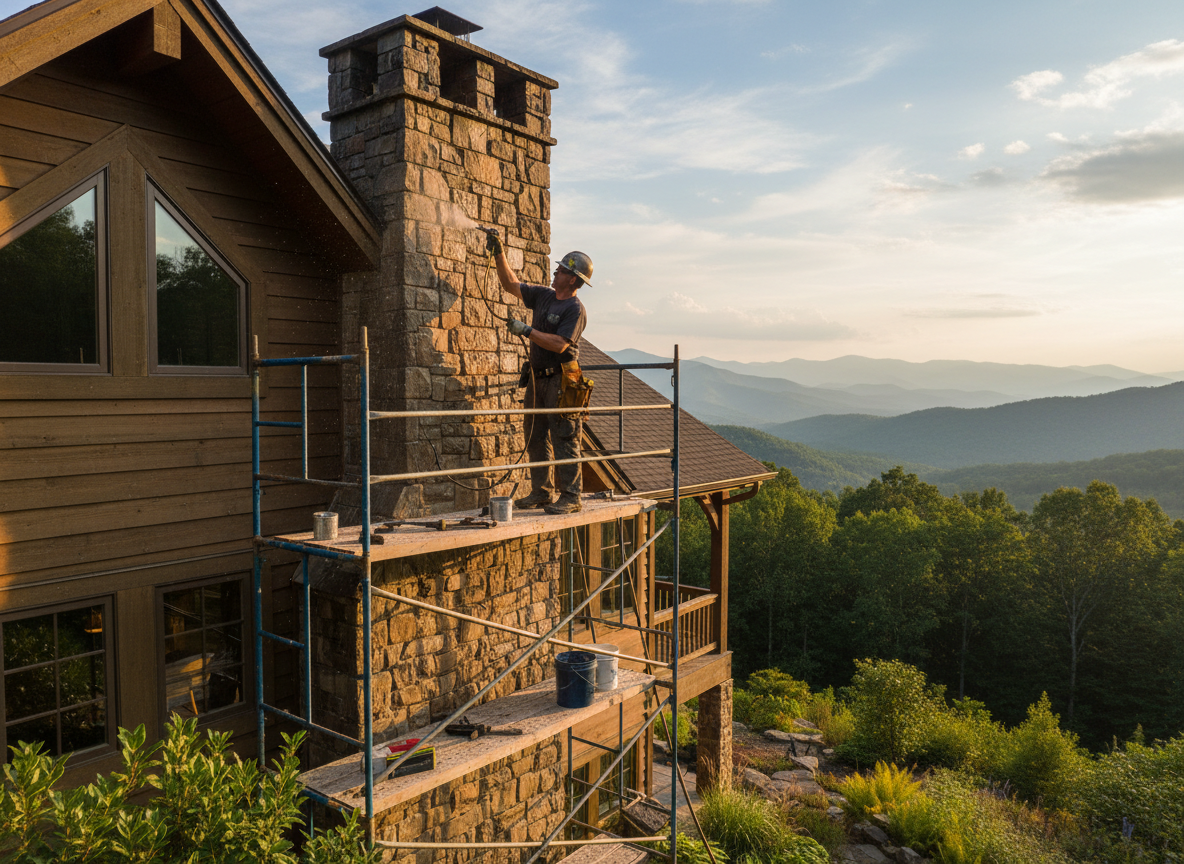
Asheville sits in the Blue Ridge Mountains where frequent rain and fog drive moisture deep into mortar joints and flue liners. Homes in neighborhoods such as Montford and Grove Park often date to the early 1900s with soft brick and lime mortar that absorbs water quickly. Without a breathable masonry sealer, water migrates through the stack and stains ceilings or rots framing above the firebox. Proper waterproofing uses silane-siloxane blends that penetrate rather than film over the surface, allowing vapor to escape while blocking liquid water.
Edge cases appear on chimneys that share walls with finished attics or run through low-slope roof sections common on Biltmore Village cottages. Here the flashing transition must be reworked before any sealer is applied, or trapped moisture will push salts to the surface and spall the brick. Technicians also watch for crown cracks that let water pool at the top; these are packed with hydraulic cement and then coated so runoff sheets away from the flue opening. Code in Buncombe County requires that any work above the roofline maintain clearance from combustible framing, so access often means staging on the steep terrain around many Asheville properties.
Homeowners sometimes confuse waterproofing with a full tuckpointing job. Sealing alone will not restore lost mortar, yet it buys time when the joint erosion is minor. In practice the crew pressure-washes with a mild detergent, lets the masonry dry for at least two days, then applies two coats of sealer from the crown down to the roofline. The treatment lasts five to seven years before reapplication is needed, depending on how exposed the chimney stands to prevailing winds off the mountains.
Technician insight
In Asheville the thing that catches most people out with chimney waterproofing is how fast moss and lichen trap moisture on the north face of stacks in Montford and West Asheville; if you seal over that growth it just keeps working underneath and the brick keeps spalling.
Persistent Leak on a Montford Chimney
Homeowner reported ceiling stains after heavy spring rains. Inspection showed open crown joints and moss-covered north brick. Crew cleaned the growth, repacked the crown, then applied two coats of silane-siloxane sealer. No further leaks appeared through the next winter.
How it works
- 1
Site Assessment
Technician climbs to inspect crown, flashing, and brick condition from the roof in Asheville neighborhoods.
- 2
Preparation
Loose debris and efflorescence are removed so the sealer can penetrate the masonry surface.
- 3
Sealer Application
Two coats of breathable silane-siloxane waterproofing are applied from crown to roofline.
- 4
Final Check
Crew verifies runoff direction and leaves a dated tag noting the product used.
Pricing
Cost depends on chimney height, access difficulty on sloped lots, and whether flashing repairs are needed first. Upfront quotes provided on site.