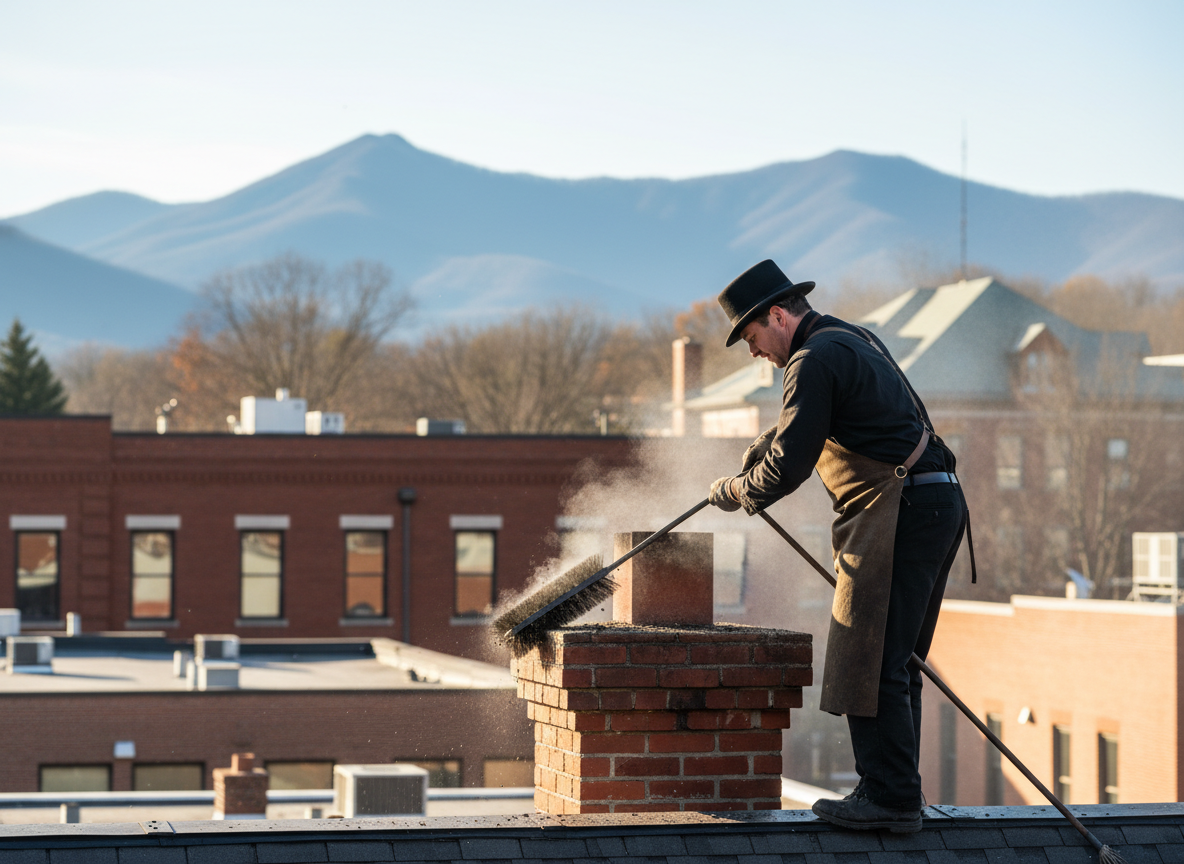
Asheville's housing stock includes many pre-1950 brick homes in neighborhoods like Montford and the historic districts near the French Broad River. These chimneys often feature narrow flues lined with parging that has deteriorated over decades of wood heating. Frequent rain and high humidity in the Blue Ridge foothills allow moisture to penetrate masonry joints, turning loose creosote into a sticky, hard-to-remove deposit that standard brushes miss. Sweep crews must work from the roof on steep pitches common to the terrain while protecting nearby metal roofs from falling debris.
Cold winter nights drive heavy wood burning, accelerating creosote formation in flues that already suffer from poor draft caused by surrounding tree cover and valley fog. A single missed pocket of glazed creosote can ignite during a later burn, so sweeps include camera inspection of every bend and smoke chamber. Homeowners in areas like Biltmore Village sometimes discover animal nests or mortar failure only after the sweep rod stops, requiring on-the-spot decisions about whether to proceed or schedule masonry repair.
Sweep protocols account for the mix of clay tile and unlined stone chimneys found throughout Buncombe County. Technicians start at the top, working downward with custom-sized brushes to avoid cracking fragile tiles, then finish with a thorough vacuum of the firebox and hearth. After the job, the flue is rechecked for remaining residue because mountain winds can redistribute fine particles back into the chimney overnight.
Technician insight
In Asheville the thing that catches most people out with chimney sweep is how quickly creosote hardens on the north-facing side of the flue after a week of rain and freeze-thaw cycles; older homes on steeper lots in the Montford area often have caps that are half-buried in pine needles, so we always clear those first or the sweep rod binds before we reach the smoke chamber.
Hidden Creosote Pocket in Montford Home
Homeowner reported slow draft on cold mornings. We found the flue clear at the top but a thick glazed layer three feet above the smoke chamber where valley fog kept the masonry damp. After extended brushing and vacuuming, the draft improved and the homeowner could burn without smoke rolling into the room.
How it works
- 1
Roof Access and Initial Inspection
Crew evaluates roof pitch and chimney condition from the ground before climbing, noting any loose caps or surrounding tree limbs that could interfere.
- 2
Mechanical Sweeping
Custom brushes sized to the flue are run from the top down, breaking loose creosote layers while vacuuming debris at the firebox to keep the home clean.
- 3
Camera Scan and Debris Removal
A flexible camera checks every section of the flue for remaining deposits or damage, followed by complete removal of all loosened material from the smoke chamber.
- 4
Final Draft and Safety Check
The chimney is tested for proper draft and the firebox is inspected for cracks before the crew leaves the site.
Pricing
Upfront quotes given after phone description of chimney height and access; final price confirmed on site.