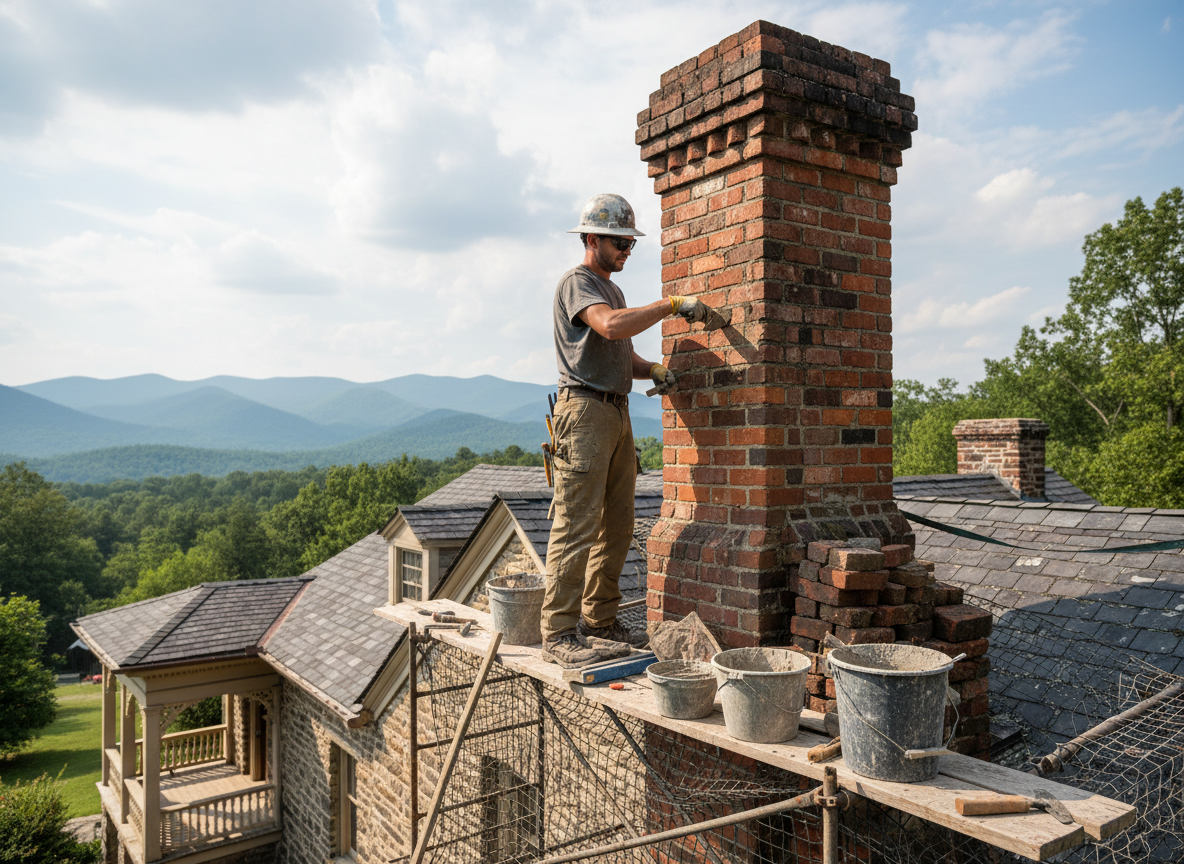
Asheville's older brick homes, especially those built before 1950 in neighborhoods like Montford and Grove Park, often have chimneys with deteriorated mortar joints and cracked flue liners from decades of freeze-thaw cycles and heavy rainfall. Restoration starts with a full inspection to identify spalling bricks, missing crown caps, and water intrusion points that allow moisture into the attic and walls. Technicians repoint joints with lime-based mortar matched to the original construction, replace damaged flue tiles where accessible, and install new chimney caps to block rain and animals while preserving draft performance.
Restoration work here frequently involves addressing the effects of Asheville's humid subtropical climate combined with winter ice, which accelerates masonry breakdown on chimneys exposed on the prevailing wind side of the house. Crews remove loose or damaged brick, rebuild sections with compatible materials, and flash the chimney base properly to the roof to stop leaks that commonly appear after heavy spring rains. Homeowners in the Asheville area notice the difference when water stains disappear from ceilings and the fireplace draws cleanly again without downdrafts caused by structural gaps.
Code considerations in Buncombe County require that restored chimneys maintain proper height above the roofline and that any liner work meets current safety standards for wood-burning appliances. Skipping these steps during restoration can lead to carbon monoxide risks or insurance issues if a future inspection flags the work. The process also includes cleaning out debris from the smoke chamber and verifying that the damper operates smoothly before the job is complete.
Technician insight
In Asheville, the thing that catches most people out with chimney restoration is how quickly rainwater gets behind the flashing on south-facing chimneys in Montford and similar older neighborhoods, rotting out the roof deck before the homeowner notices. The brick is often soft from years of acid rain and freeze cycles, so you cannot just slap new mortar on top without rebuilding the crown and re-flashing properly or the water finds a new path inside the walls.
Chimney Restoration on an Older Montford Home
Heavy spring rains caused recurring ceiling stains above the fireplace in a 1920s brick house. Inspection revealed failed mortar and missing crown allowing water to travel down the flue and into the attic. Crews rebuilt the crown, repointed the upper masonry, and installed new step flashing integrated with the existing slate roof. The leaks stopped and the fireplace now draws without backdraft issues.
How it works
- 1
Initial Inspection
Technician examines the full chimney structure from crown to foundation, checking for cracks, water damage, and flue condition.
- 2
Masonry Assessment
Identify failed mortar, spalling bricks, and compromised flashing specific to Asheville's older housing stock.
- 3
Repair and Rebuild
Repoint joints, replace damaged sections, and install new caps or liners as needed while matching existing materials.
- 4
Final Testing
Verify draft, check for leaks after water test, and confirm safe operation before leaving the site.
Pricing
Upfront quotes provided after on-site inspection; cost varies with height, extent of masonry damage, and access.