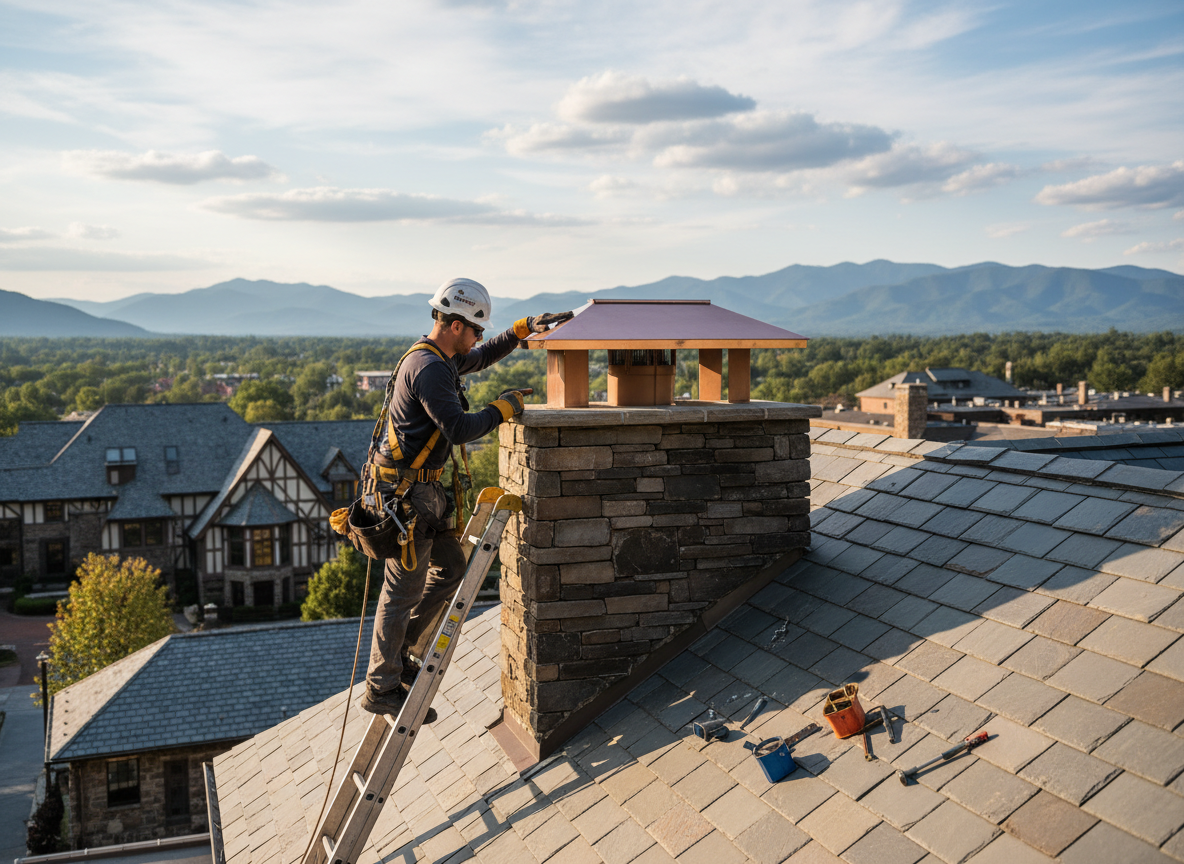
Chimney caps in Asheville must handle frequent heavy downpours and gusty mountain winds that drive water past standard designs. Older brick chimneys in Montford and Grove Park often have irregular flue tops or settled crowns that require custom stainless steel or copper caps rather than off-the-shelf models. Without proper anchoring and flashing, caps loosen over time and allow water to saturate flue liners, leading to spalling bricks and interior moisture stains.
Edge cases include homes with multiple flues or shared chimneys where a single oversized cap can create negative pressure issues. We check for adequate clearance from nearby trees and roof valleys that funnel runoff directly onto the cap. Code requires spark arrestors on wood-burning appliances, and we verify that the chosen cap meets that requirement while still allowing proper draft in colder months when temperature inversions are common in the Asheville valley.
Homeowners sometimes attempt installation themselves on two-story homes with steep pitches common in the area, only to discover that ladder access is unsafe without proper staging. We always inspect the crown and flashing condition at the same time because a new cap on a failing crown simply moves the leak point lower down the chimney stack.
Technician insight
In Asheville, the thing that catches most people out with chimney cap installation is the combination of steep roof pitches on 1920s–1940s homes in Montford and Grove Park plus frequent high winds that twist standard caps loose if they aren't through-bolted into the crown rather than just clamped.
Cap Failure on Historic Chimney
Water was entering the fireplace in a Montford home after every rain. Inspection showed the original cap had rusted through and was no longer seated on the crown. We removed the old cap, cleaned the crown, and installed a new stainless unit with through-bolts and fresh flashing. The homeowner reported no further moisture after the next several storms.
How it works
- 1
Chimney Assessment
We climb and measure the flue top, check crown condition, and note roof pitch and access points from the ground at your Asheville address.
- 2
Cap Selection
Recommend stainless or copper cap sized to the flue with integrated spark arrestor and rain diverter suited to local wind and rainfall patterns.
- 3
Secure Installation
Anchor the cap with stainless hardware and seal the base to the existing crown or add new flashing where needed to prevent wind-driven rain entry.
- 4
Final Check
Test draft with a smoke test and confirm no movement in high winds before leaving the site.
Pricing
Price varies with chimney height, roof access difficulty, and whether the crown needs repair before the cap can be installed.