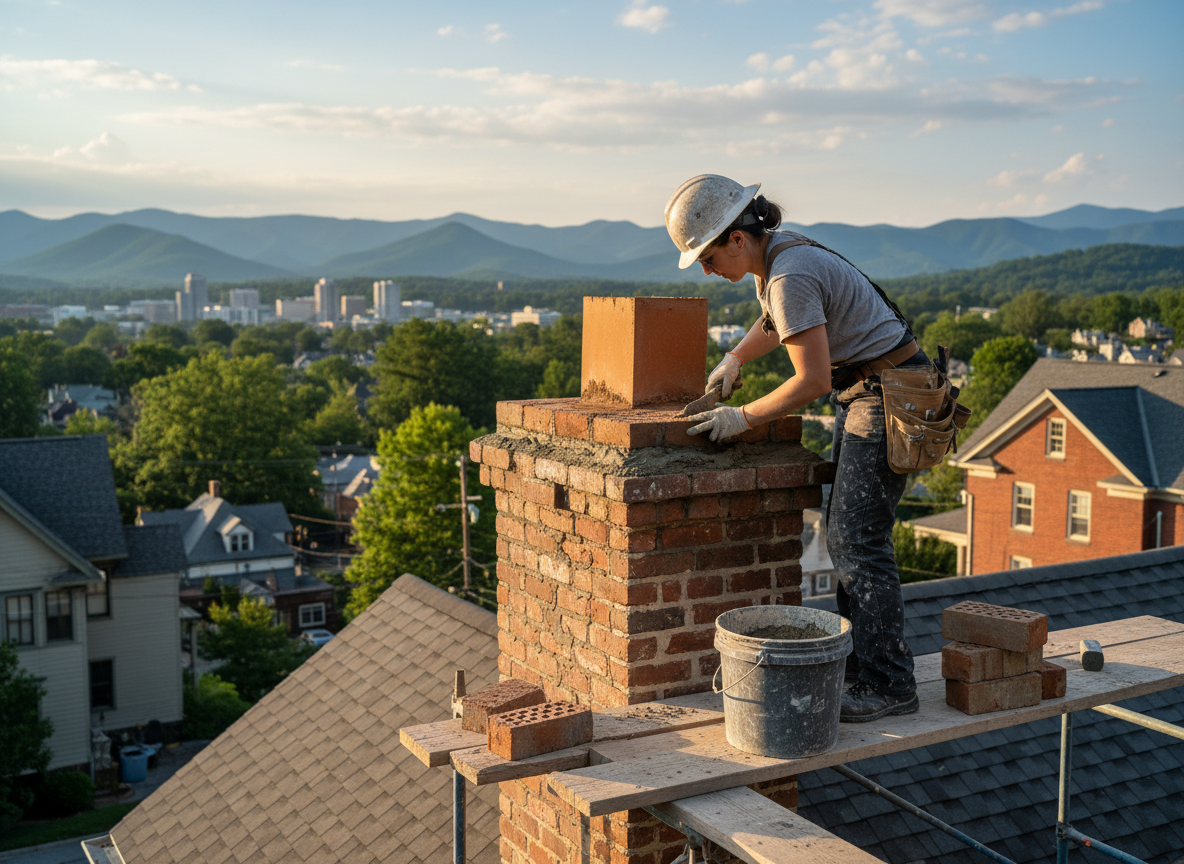
Brick chimneys in Asheville homes, especially those in neighborhoods like Montford and Biltmore Village, often show spalling and loose bricks after repeated freeze-thaw cycles from the Blue Ridge winters. We match original brick and use type N or S mortar depending on the exposure, then repoint joints to restore the flue integrity without full rebuilds. Water intrusion from heavy regional rainfall is the usual culprit behind interior staining, so we always check crown and flashing condition during every job.
Older Asheville brick chimneys built before modern codes frequently lack proper footings or have shifted due to the hilly terrain around Buncombe County. Attempting DIY tuckpointing with the wrong mix leads to faster cracking because the new mortar expands differently than the original. We remove failed sections, clean to sound material, and install stainless steel ties where needed to stabilize the stack against wind loads common in the area.
When a chimney leans or shows step cracks along the roofline, we evaluate the entire structure from the basement cleanout up through the cap. In Asheville's humid climate, efflorescence and vegetation growth inside flues accelerate deterioration, so we clear debris and install proper caps during repairs. This prevents carbon monoxide risks and keeps the system compliant with local venting requirements.
Seasonal Guidance
Heavy spring rains followed by summer humidity accelerate mortar breakdown in exposed Asheville chimneys, while fall leaf buildup adds extra moisture retention. Scheduling inspections before winter helps catch issues before freeze damage compounds.
Technician insight
In Asheville, the thing that catches most people out with brick chimney repair is how quickly water from our frequent mountain rains gets behind loose mortar in pre-1950s homes around Montford and West Asheville, then freezes and pops the face off the brick. Homeowners often try to patch just the visible spots without addressing the crown or flashing, so the same section fails again the next winter.
Leaning Stack on Beaucatcher Mountain Home
A homeowner noticed step cracks and outward lean on a brick chimney serving a 1940s house near Beaucatcher Mountain. We found the crown had cracked open, allowing water to saturate the core, and the footing had shifted slightly on the slope. We rebuilt the upper third with new ties, installed a new cap, and repointed the full height. The chimney is now plumb and sealed against further rain intrusion.
How it works
- 1
On-Site Assessment
We examine the full chimney height, flue, crown, and flashing for cracks, spalling, and water entry points specific to Asheville's terrain and rainfall patterns.
- 2
Masonry Preparation
Failed mortar and damaged brick are cut out to sound material, with debris removed to prevent future moisture trapping.
- 3
Repair and Repointing
New brick is matched and installed with appropriate mortar, followed by tooling to match original joint profiles for weather resistance.
- 4
Final Inspection and Protection
We verify stability, install or repair the cap if needed, and confirm no further water intrusion before leaving the site.
Pricing
Upfront quotes provided after inspection; pricing depends on height, access, and extent of brick damage.